Crassula ovata Leaves Scorching in Harsh Afternoon Sun
Crassula ovataCrassula ovata
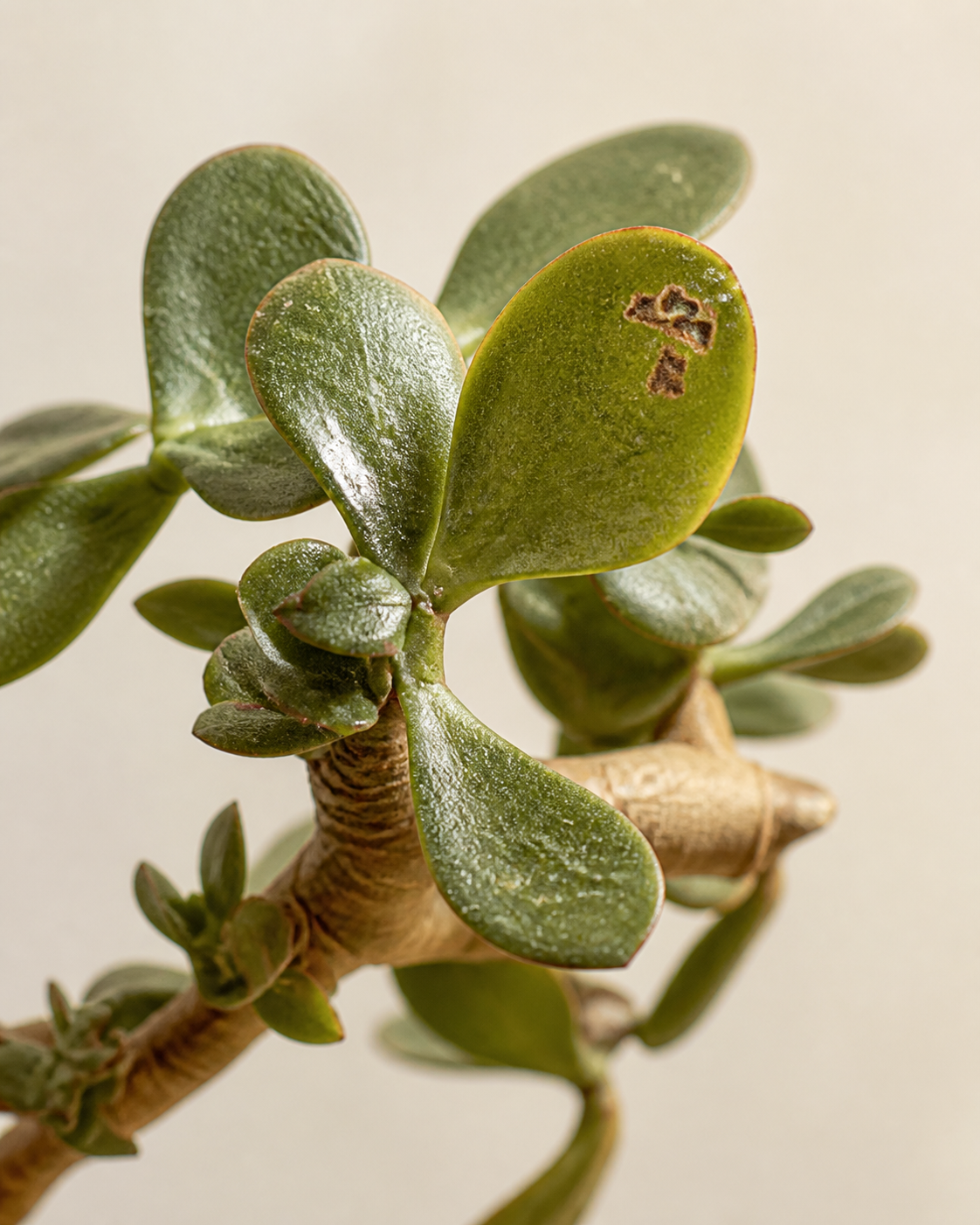
DIAGNOSIS
This Crassula ovata shows a moderate sun-related problem consistent with leaf scorch from exposure to light that is too intense, especially if the plant was moved abruptly into stronger sun. The damage happens when leaf tissues lose moisture faster than they can regulate it, leaving pale, browned, or dry patches on the sun-facing side.
PLAN FOR THE COMING DAYS
- 01
Move it out of harsh afternoon sun.
- 02
Give bright indirect light or gentle morning sun.
- 03
Avoid sudden shifts into stronger light.
- 04
Keep damaged leaves unless fully dried.
- 05
Watch new growth for signs of recovery.
FIELD NOTES
Why it happens
Crassula ovata is often described as a sun-loving houseplant, but even a jade plant can burn when light intensity rises too quickly. The usual pattern is a move from indoor shade, a shelf away from the window, or a nursery setting into direct afternoon sun without time to adapt. In that situation, the leaf surface receives more heat and radiation than it can comfortably process.
When this happens, the plant loses water through its tissues faster than normal. Because the stressed leaf cannot balance moisture and heat efficiently, parts of the surface begin to bleach, dry, or turn brown. On a moderate case, the plant is usually still structurally sound, but the visible tissue damage can remain as a scar even after conditions improve.
How to recognize it
Sun injury on Crassula ovata usually appears on the side facing the brightest light. Leaves may look faded, yellowed, tan, or brown in irregular patches rather than in neat spots. The texture can also change: healthy leaves are firm and smooth, while scorched areas become dry, papery, or slightly sunken.
A moderate case means the plant is stressed but not necessarily collapsing. You may still see plenty of intact foliage, with damage concentrated on exposed leaves rather than the whole plant. That pattern matters, because it helps separate sun scorch from more generalized root or watering problems.
Recovery plan
The first goal is not to force new growth, but to stop further injury. Move the plant out of harsh direct afternoon sun and place it where it gets bright light with gentler exposure. Morning sun or bright indirect light is usually easier for recovery than intense midday or late-day rays.
Do not remove every marked leaf at once unless it is fully dried out. Damaged leaves still help the plant manage its energy while it stabilizes. Over time, watch the newest growth rather than the old scars. If new leaves develop normally, the plant has adjusted.
Prevention
Crassula ovata can handle strong light, but it needs gradual acclimation. Any move into brighter conditions should happen step by step over several days or weeks. That slow transition gives leaf tissues time to thicken and regulate moisture more effectively.
In the future, pay special attention after seasonal light changes or after relocating the pot. A healthy jade plant in suitable light should look firm, evenly colored, and compact, without fresh bleached patches on its sunniest side.
IN THE OWNER'S WORDS
“I thought more sun would make it happier, but the brightest window turned out to be too much too fast.”
COMMON QUESTIONS
0401Can Crassula ovata get too much sun?
Yes. Crassula ovata tolerates strong light, but sudden exposure to intense direct sun can scorch the leaves, especially after growing in softer indoor light.
02Will sunburned jade plant leaves turn green again?
Usually no. Damaged tissue often stays marked, but the plant can still recover well if new growth forms normally under better light conditions.
03How do I tell sun scorch from watering problems on Crassula ovata?
Sun scorch usually appears on the brightest, most exposed side as bleached, brown, or dry patches. Watering problems tend to affect the plant more generally rather than mainly on the sun-facing side.
04Should I cut off scorched leaves?
Only remove leaves that are fully dried or no longer useful to the plant. Partially damaged leaves can still remain while the plant stabilizes.