Polyscias scutellaria and the Quiet Story of Leaf Drop
Polyscias scutellariaPolyscias scutellaria
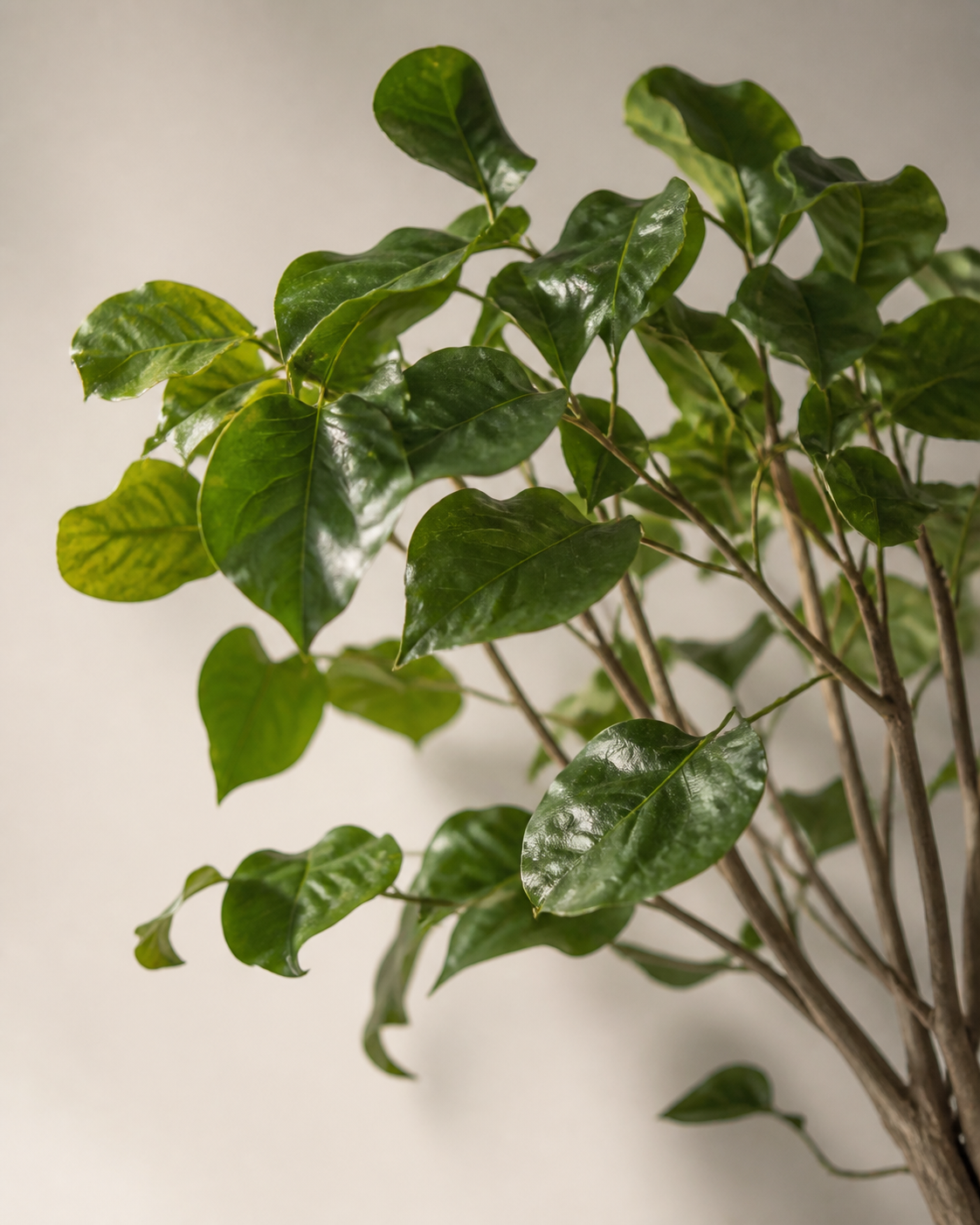
DIAGNOSIS
Moderate leaf drop in Polyscias scutellaria usually reflects environmental stress rather than a single disease event. This species reacts noticeably to shifts in watering, light, temperature, and air movement, so leaf loss is often the plant’s way of reducing strain while conditions feel unstable.
PLAN FOR THE COMING DAYS
- 01
Water when the top layer of soil begins to dry.
- 02
Keep the plant in bright, indirect light.
- 03
Protect it from drafts and heating vents.
- 04
Let excess water drain fully after watering.
FIELD NOTES
Polyscias scutellaria is often admired for its polished foliage and upright, elegant structure. When leaves begin to fall, the change can feel sudden, but in most cases the plant has been signaling discomfort for some time. Moderate leaf drop is best understood as a stress response: the plant is adjusting its canopy because the current environment is harder to support than usual.
Why it happens
This species is especially sensitive to inconsistency. If the soil stays too wet for long periods, roots struggle to breathe and the plant may shed leaves as root function declines. If the potting mix becomes too dry, the plant can also respond by dropping older foliage to conserve moisture. In practice, repeated swings between overly wet and overly dry conditions are often more disruptive than either extreme alone.
Light also plays a central role. Polyscias scutellaria prefers bright, stable conditions, and it may react when moved into a dim corner or exposed to abrupt changes in intensity. Temperature shifts matter as well. Cool drafts, hot dry air from heaters, and sudden day-to-night fluctuations can all trigger leaf loss. Because the plant has a woody framework but relatively delicate foliage, it tends to register these disturbances quickly.
How to recognize it
Moderate drop usually means the plant is still viable but under pressure. You may notice a scattering of fallen leaves rather than total collapse. Some leaves may yellow first, while others dry at the edges or fall while still partly green. The pattern often appears after a move, a missed watering cycle, overcorrection with heavy watering, or placement near an air conditioner, radiator, or drafty window.
The key clue is that leaf drop is rarely random. It usually follows a period of change. Looking at recent care history often explains more than looking for a dramatic visible lesion or pest mark.
Recovery plan
Recovery starts with stabilization, not aggressive intervention. Give the plant consistent moisture by watering only when the upper layer of the potting mix has begun to dry, then water thoroughly and let excess drain away. Place it in bright, indirect light and avoid relocating it repeatedly while it rebalances.
Check its position in the room. Keep it away from cold drafts and strong heat sources, and aim for an even temperature pattern. If the soil is compacted or staying wet for too long, improving drainage and aeration will help reduce root stress. Avoid heavy feeding while the plant is actively dropping leaves; the priority is to restore steady conditions so new growth can resume.
Prevention
The best prevention is routine. Polyscias scutellaria does well when care is predictable: moderate watering, stable light, and protection from sudden environmental swings. Once the plant trusts its conditions again, leaf drop usually slows, and the remaining canopy can support fresh, healthy growth.
IN THE OWNER'S WORDS
“I thought it was being fussy, but the fallen leaves started making sense once I looked at how often the room conditions were changing.”
COMMON QUESTIONS
0401Why is my Polyscias scutellaria dropping leaves?
Most often, leaf drop is a response to stress from inconsistent watering, low or changing light, drafts, or temperature swings rather than a single disease.
02Can Polyscias scutellaria recover after leaf drop?
Yes. If the roots are still functional and conditions become stable, leaf drop often slows and new growth can return over time.
03Does overwatering cause leaf drop in Polyscias scutellaria?
Yes. Soil that stays wet too long can stress the roots, reducing their ability to support the canopy and leading to fallen leaves.
04Can underwatering make Polyscias scutellaria lose leaves too?
Yes. When the potting mix becomes too dry, the plant may shed older leaves to conserve moisture.